

Pohung Toy and Gift Limited.
Office Add:No.4, Shuibei Lane, Shuibeixin Village, Fenggang Town, Dongguan, 523690, China
Tel:+86-13925711195
Mobile:+86-13925711195
Email:Sheldon.K@pohungtoygift.com
Website:https://www.pohungtoygift.com
Sp5der versus Rival Street Fashion Brands: What Truly Makes It Different?
Invest time in street-style culture in 2026 and you’ll find yourself amid an ongoing discussion: how does Sp5der actually stack up against the established heavyweights of the streetwear category? Is it genuinely in the same conversation alongside Supreme, BAPE, or Off-White, or is it a buzz-led brand coasting on cultural energy that will fade as quickly as it arrived? These are fair questions, and responding to them accurately necessitates rising above tribal brand loyalty to examine what Sp5der offers in relation to its rivals across the dimensions that matter most to serious streetwear consumers: aesthetic vision, build quality, cultural realness, pricing, and future direction. This breakdown measures Sp5der against five key rivals — Supreme, BAPE, Off-White, Corteiz, and Essentials by Fear of God — to determine where it authentically succeeds, where it falls short, and what sets it entirely apart from all competitors in the space. The finding is more layered and more positive for Sp5der than doubters would imagine, and seeing the full picture means engaging with the brand on its own terms instead of evaluating it by standards it was never built to hit.
Sp5der Against Supreme: Two Labels, Two Distinct Eras of Urban Fashion
Supreme is the company that created modern drop culture, and every conversation about Sp5der almost always includes some comparison between them — but they are genuinely less alike spiderhoodie than the surface-level drop-model comparison suggests. Supreme emerged from the NYC skate and underground punk scene of 1994, and its visual philosophy — the box logo, the collaborations with fine artists, the downtown cool — is grounded in a specific geography and counterculture lineage that is entirely different from Sp5der’s Atlanta-based hip-hop heritage. Sp5der’s aesthetic voice leans maximalist and triumphant; Supreme’s is reduced and knowing, employing deliberate irony and reduction as core aesthetic strategies. The consumer experience differs significantly too: Supreme’s resale ecosystem has been thoroughly professionalized, with automated buyers, resellers, and commercial distribution that have pushed the label away from its subcultural origins in ways that original-era buyers actively resent. Sp5der, as a much younger brand, maintains more of the unpolished, grassroots energy that characterized Supreme in its early era. Regarding product quality, both brands deliver premium streetwear-grade garments, although Supreme’s extended production history means its manufacturing consistency is more proven and dependable across items. For buyers who want cultural authenticity rooted in hip-hop rather than skate culture, Sp5der is the clear winner by definition — it’s not merely proximate to the music scene it was actually born from it.
Sp5der vs. BAPE: Graphic Maximalism Head to Head
Among all the dominant street-style labels, BAPE comes closest to matching Sp5der aesthetically to Sp5der — both champion strong graphics, bright colors, and a bold, maximalist design perspective that prioritizes impact over restraint. BAPE, founded by NIGO in Tokyo in 1993, introduced the concept of celebrity-endorsed, limited-quantity streetwear for an international audience and pioneered the aesthetic logic that Sp5der builds upon today. But BAPE’s cultural peak — during its prime in the mid-2000s when Lil Wayne, Pharrell, and Kanye West were seen in BAPE constantly — has passed, and what BAPE releases today, even if still relevant, holds a distinctly retrospective flavor that Sp5der completely avoids. Sp5der feels urgently contemporary in a way that BAPE, with thirty years of history, struggles to claim authentically in 2026. On price, the brands are comparable, BAPE sweatshirts generally priced from $200 to $450 and Sp5der’s actual retail cost sitting in the $200 to $400 range. Build quality is similarly matched, with both brands delivering heavyweight fabrics and careful graphic execution that back up their luxury-adjacent costs at the top of the streetwear market. The real distinction lies in cultural standing: in 2026, Sp5der carries more immediate excitement among the 16-to-30 demographic that marks the forefront of street-style culture, while BAPE holds more historical prestige with collectors and streetwear historians who lived through its peak years directly.
Sp5der versus Off-White: Street Style and High Fashion Operating on Different Planes
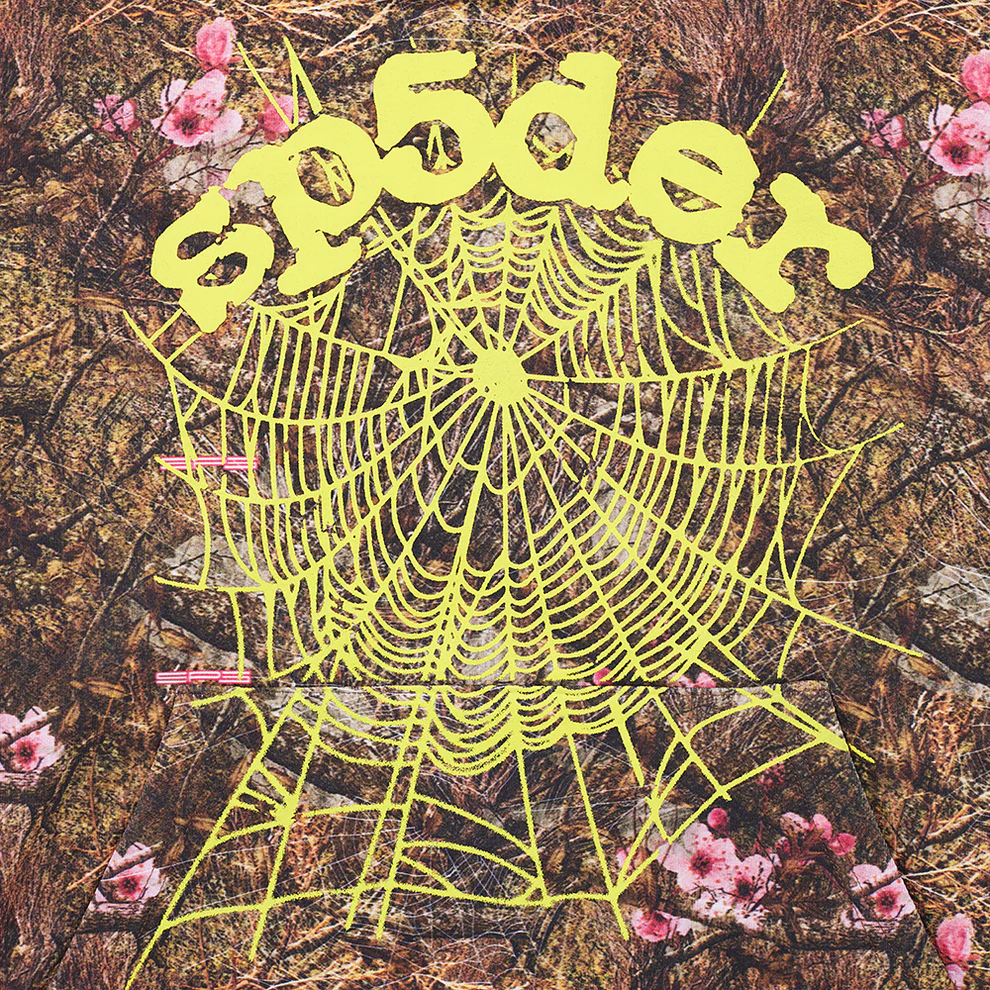
Off-White, established by the late great Virgil Abloh in 2012, sits at a different tier within the fashion hierarchy than Sp5der — more overtly luxury-oriented, more expensive, and more engaged with the relationship between streetwear and luxury couture. Placing Sp5der next to Off-White tells us less about which brand wins and more about the distinct goals and communities and for whom. Off-White’s visual language — the trademark quotation marks, slanted stripes, and deconstructed garment construction — speaks to a fashion-literate audience that navigates freely between the realms of designer boutiques and sneaker culture. Sp5der is made for a group of people that is grounded in hip-hop and genuine street credibility, for whom luxury-world status is secondary than music industry endorsements. The pricing gap is considerable, with Off-White sweatshirts generally selling at $400–$700, positioning Sp5der as the more affordable alternative at the premium tier. Following Virgil Abloh’s death in 2021, Off-White has pressed on under fresh creative leadership, but the label’s character has shifted in directions that have estranged part of its original following, creating an opening that labels like Sp5der have begun to occupy with younger-generation shoppers. Both labels provide shoppers with excellent visual design, high-quality construction, and authentic cultural standing — they simply occupy separate cultural spaces, and nearly all devoted urban fashion collectors tend to make room in their collection for both aesthetically and practically.
Sp5der versus Fear of God’s Essentials Line: Fundamentally Different Approaches
Fear of God Essentials stands for perhaps the sharpest philosophical contrast to Sp5der within the current streetwear scene — Essentials operates with a minimal, muted, restrained approach, while Sp5der is graphic-heavy, vivid, and celebratory. The Essentials label by Jerry Lorenzo, which functions as the more affordable category of the broader Fear of God universe, delivers elevated basics in understated natural color tones and low-key graphic elements that can be worn in almost any context without standing out in the crowd. The spider hoodie, on the other hand, declares itself the moment it enters a room, without apology — it is not background clothing, and not a single person sporting it is attempting to blend in. Price is another key distinction: Essentials hoodies retail from around $90 to $130, making them far more affordable compared to Sp5der’s $200–$400 retail. Yet the lower price also means Essentials lacks the scarcity and collectibility that form the core of Sp5der’s appeal, and its resale performance is modestly proportional relative to Sp5der’s frequently substantial resale value gains. Deciding between the two is not really a question of quality — each produces high-quality pieces at their respective price points — but of personal identity and stylistic purpose. For those seeking a functional, understated closet foundation, the Essentials line excels in that role. If you’re after one standout statement piece that makes a bold statement regarding your hip-hop cultural affiliation and the maximalist arm of streetwear, Sp5der is the answer.
Brand Comparison Overview
| Brand | Aesthetic Direction | Hoodie Retail Price | Cultural Roots | 2026 Hype Level | Resale Premium |
|---|---|---|---|---|---|
| Sp5der | Bold maximalist, hip-hop origins, signature web graphics | $200–$400 | Atlanta-based hip-hop culture | Among the Highest | Strong |
| Supreme | Minimalist, skate, box logo | $150–$350 | NYC underground skate and punk scene | Steady-High with legacy appeal | Among the Best |
| BAPE | Japanese pop-art maximalism with signature camo | $200–$450 | Tokyo street | Respectable but moderate | High |
| Off-White | Luxury-street hybrid, graphic text | $400–$700 | Luxury-streetwear convergence | Moderate-to-Strong | High |
| Corteiz | Underground, utilitarian | $100–$250 | London underground | High (rising) | Moderate-High |
| Fear of God Essentials | Minimalist basics, neutral palette | $90–$130 | LA luxury-adjacent | Moderate | Minimal |
The Qualities That Actually Set Sp5der Apart from Every Other Brand
Looking past the buzz and evaluated honestly, Sp5der has several characteristics that genuinely distinguish it from rival brands in real, significant dimensions. To begin, its creator credibility is unequaled in the current streetwear landscape: Young Thug isn’t a hired celebrity spokesperson who allowed his image to be used, but the creative force behind his own concept, and that distinction is detectable in the creative consistency and real personality in every Sp5der garment. Additionally, the brand’s visual vocabulary is wholly original — the signature web design, rhinestone-forward maximalism, and Y2K-inspired palette form a cohesive aesthetic that is not borrowed from or derivative of any predecessor brand, which is a genuine achievement in a market where genuine novelty is uncommon. Third, the brand’s position at the intersection of hip-hop, streetwear, and fashion positions it as uniquely interpretable across multiple cultural contexts simultaneously, giving it cultural reach that more specialized labels can rarely match. Per Highsnobiety, brands that attain lasting cultural significance are consistently those that can articulate a clear and authentic cultural point of view — a definition that applies to Sp5der far better than many of its more commercially polished competitors. Fourth, Sp5der’s relatively recent founding means there hasn’t been sufficient time to solidify into the stagnation of an established name, and the continued creative drive in Sp5der’s design work reflects a brand still operating with a point to make.
The Bottom Line: Is Sp5der the Right Brand for You Above Other Options
Sp5der represents the correct option for shoppers whose visual instincts, personal identity, and closet objectives match what the label genuinely delivers, and a potentially poor choice for anyone wanting what it wasn’t built to offer. If your aesthetic runs maximalist, if you connect with Young Thug’s creative vision, and if hip-hop culture is the main lens by which you interpret style, Sp5der will fit your wardrobe and identity more organically than nearly any other brand on the market. If you value investment-grade resale performance as a key consideration, Sp5der’s history of resale strength is encouraging, although Supreme’s deeper secondary market track record and more extensive liquidity make it the more dependable financial choice. If versatility and neutrality are your priorities, Essentials provides more value per dollar for fewer dollars with far more outfit flexibility. Today’s breadth of streetwear options offers genuinely excellent choices spanning many aesthetics and budgets, and the most astute street-fashion consumers are people who engage with each brand on its own footing instead of rating them on a single imagined scale. What the brand delivers is a combination that no other brand precisely replicates: authentic hip-hop DNA, bold original design, premium construction, and genuine cultural momentum. Learn more about how Sp5der measures up from independent editorial at Complex, which provides detailed brand analysis and reader discussion around current streetwear brand rankings.


Copyright © Pohung Toy and Gift Limited. All Rights Reserved.